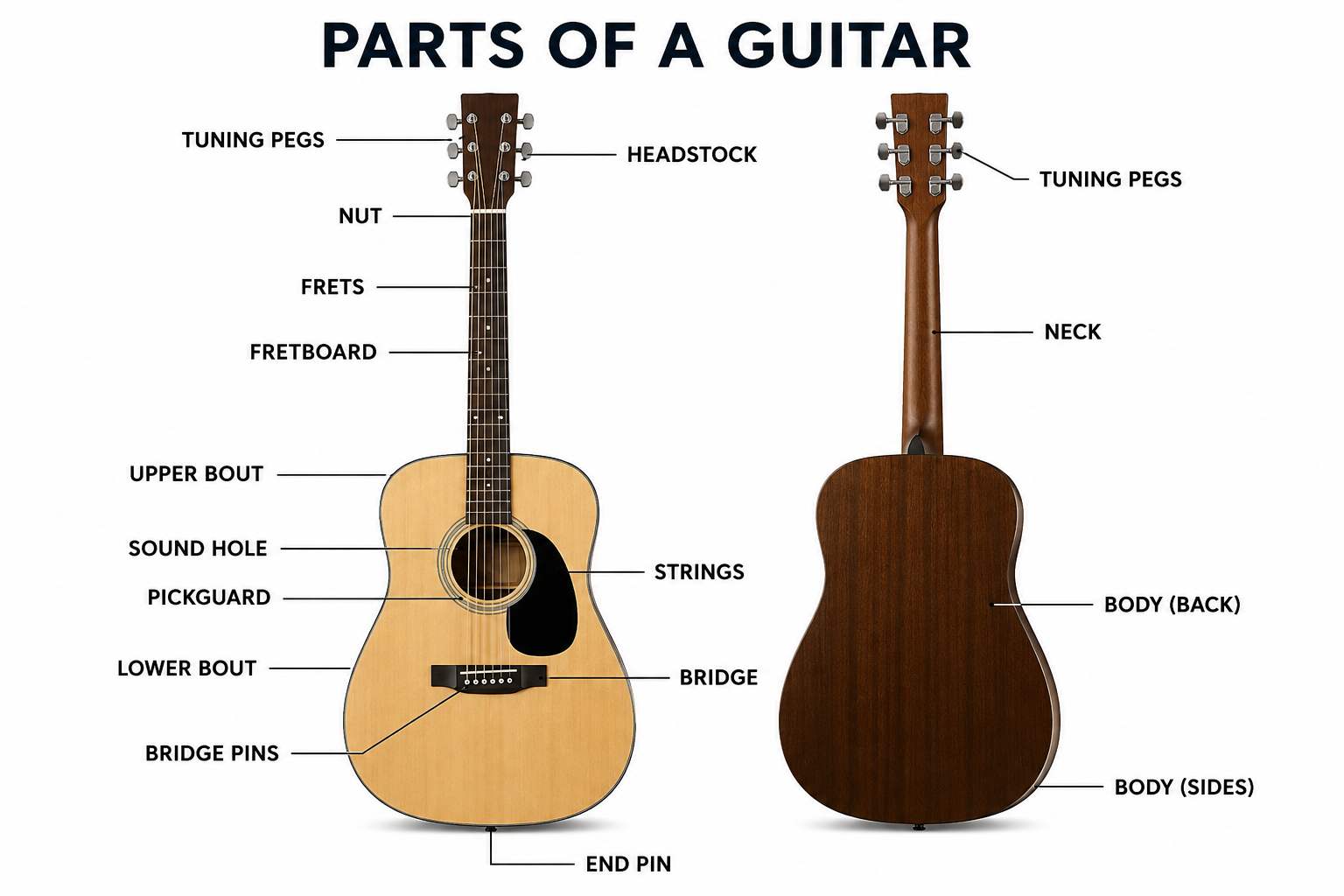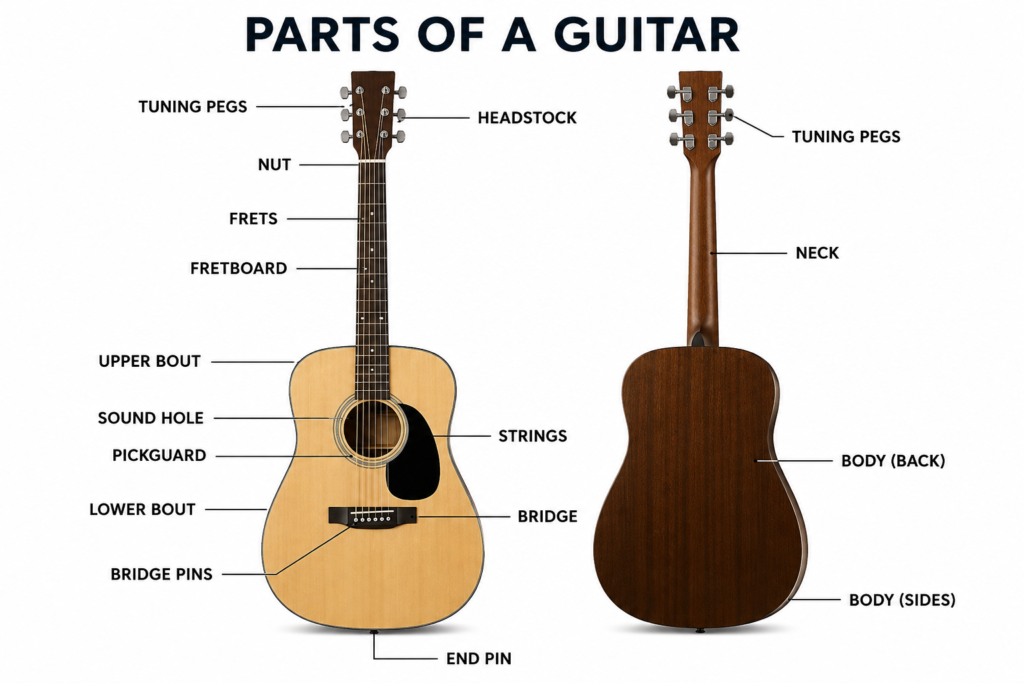
Basic Parts of an Acoustic Guitar
-
Headstock
The top section of the guitar where the tuning pegs are mounted. It holds the strings in place and plays an important role in maintaining proper string tension and tuning stability.
-
Tuning Pegs
The tuning pegs (also called tuning machines) are used to tighten or loosen the strings. Adjusting the tension changes the pitch of each string, allowing you to tune the guitar accurately.
-
Nut
A small piece located between the headstock and the fretboard. It keeps the strings evenly spaced and at the correct height above the fretboard, helping them vibrate freely while ensuring comfortable playability.
-
Neck
The neck is the long section of the guitar that connects the headstock to the body. It supports the fretboard and provides the surface where your hand moves to play different notes and chords.
-
Fret
Frets are the thin metal strips embedded across the fretboard. Pressing a string against a fret shortens its vibrating length, producing different musical notes.
-
Fretboard
The fretboard is the smooth wooden surface attached to the neck that contains all the frets. It provides the playing area where your fingers press the strings to create notes, chords, and melodies.
-
Cutaway
A cutaway is a specially shaped section of the guitar body near the neck. This design allows easier access to the higher frets, making it more comfortable to play high-pitched notes and solos.
Body Parts
-
Sound Hole
The sound hole helps your guitar produce a louder and richer sound. When you strum the strings, they vibrate. These vibrations travel into the guitar’s body, causing the air inside to vibrate as well. The vibrating air then flows out through the sound hole, naturally amplifying the sound and giving the guitar its warm, resonant tone.
-
Bridge
The bridge is attached to the front of the guitar body and anchors the strings securely. It transfers the strings’ vibrations to the top of the guitar, allowing the body to resonate and produce a fuller sound.
-
Saddle
The saddle is a small strip fitted into the bridge. It supports the strings at the correct height, helps maintain proper string spacing, and efficiently transfers string vibrations to the guitar body for better tone.
-
Bridge Pins
Bridge pins are small pins that hold the strings securely inside the bridge. They keep the strings firmly anchored while allowing the vibrations to pass into the guitar body.
-
Pickguard (Scratch Guard)
The pickguard is a protective plate placed beside the sound hole. It shields the guitar’s finish from scratches and wear caused by picks or repeated strumming.
-
Strings
The strings are the primary source of the guitar’s sound. When they are plucked or strummed, they vibrate to create musical notes. These vibrations are then transferred to the guitar body, where they are naturally amplified.
-
Strap Pin
A strap pin is a small metal button attached to the guitar body. It provides a secure attachment point for a guitar strap, allowing you to play comfortably while standing.