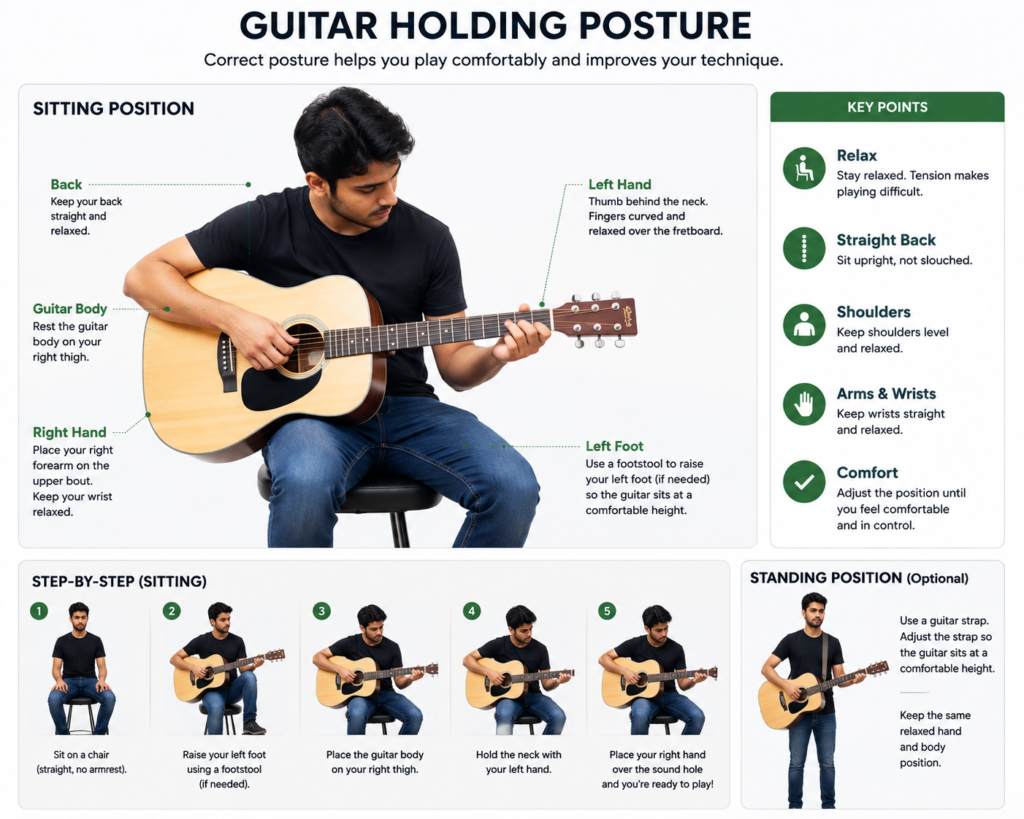
🎸 Holding Posture
Hold the Guitar. Don’t Fight It.
A guitar should feel like a natural extension of your body—not something you’re struggling to hold. When you’re comfortable, your hands move freely, your playing improves, and practice becomes much more enjoyable.
Remember: A relaxed body creates relaxed music.
🪑 Sitting Position
📖 What is it?
Sit on a sturdy chair without armrests. Keep your back straight, relax your shoulders, and place both feet comfortably on the floor.
Don’t lean toward the guitar. Let the guitar come to you.
💡 Why is it important?
A balanced sitting position improves comfort, control, and focus during practice.
⚠️ Common Mistake
Leaning forward or slouching while trying to see the fretboard.
🎯 Musical Steps Tip
Instead of bending your back, slightly tilt the guitar upward if you need a better view.
🎸 Guitar Position
📖 What is it?
Rest the guitar on your right thigh (left thigh for left-handed players). Let the guitar balance naturally without squeezing it.
💡 Why is it important?
A stable guitar allows both hands to move freely and naturally.
⚠️ Common Mistake
Holding the guitar too tightly with your arms.
🎯 Musical Steps Tip
If you remove both hands for a second, the guitar should stay balanced on your leg.
✋ Left Hand
📖 What is it?
Place your thumb behind the neck and curve your fingers naturally over the fretboard. Press the strings with your fingertips.
💡 Why is it important?
A relaxed left hand improves finger movement, speed, and accuracy.
⚠️ Common Mistake
Wrapping the thumb over the neck or squeezing the neck too tightly.
🎯 Musical Steps Tip
Imagine you’re holding a small bird—firm enough so it doesn’t fly away, but gentle enough that you don’t hurt it.
🤚 Right Hand
📖 What is it?
Rest your forearm lightly on the guitar and keep your wrist relaxed. Let your hand naturally hover above the sound hole.
💡 Why is it important?
A relaxed right hand creates smoother strumming, better rhythm, and improved control.
⚠️ Common Mistake
Keeping the wrist stiff or pressing the forearm too hard against the guitar.
🎯 Musical Steps Tip
Your wrist should move like a loose pendulum—not like a locked hinge.
🦶 Left Foot (Optional)
📖 What is it?
Use a footstool or small block to raise your left foot slightly if it feels more comfortable.
💡 Why is it important?
It lifts the guitar into a more natural playing position and reduces strain on your body.
⚠️ Common Mistake
Raising the foot too high, making the guitar tilt excessively.
🎯 Musical Steps Tip
Raise your foot only enough so the guitar feels comfortable—not forced.
🚶 Standing Position
📖 What is it?
Use a guitar strap and adjust it so the guitar sits at a comfortable height.
💡 Why is it important?
Keeping a similar height while sitting and standing helps your hands adapt more easily.
⚠️ Common Mistake
Wearing the guitar too low because it looks stylish.
🎯 Musical Steps Tip
Choose comfort over appearance. Great technique always looks better than an uncomfortable pose.
⭐ Golden Rules
✅ Relax
💡 Why? Relaxed muscles move faster and make playing easier.
✅ Sit Tall
💡 Why? Good posture reduces fatigue and improves balance.
✅ Relax Your Shoulders
💡 Why? Loose shoulders help your arms and hands move naturally.
✅ Keep Your Wrists Natural
💡 Why? A comfortable wrist position prevents unnecessary strain.
✅ Comfort Comes First
💡 Why? Every guitarist is different. Small adjustments can make a big difference.
🎯 Quick Setup Checklist
☐ Stable chair without armrests
☐ Back straight and relaxed
☐ Guitar balanced on your thigh
☐ Left thumb behind the neck
☐ Fingers naturally curved
☐ Right hand above the sound hole
☐ Shoulders relaxed
☐ Wrists comfortable
☐ Ready to play! 🎶
🌟 Musical Steps Wisdom
“Don’t hold the guitar with strength. Hold it with balance.”